What it’ll Take to Step into Possibility in 2026 💗
A special note from Chantaie (take your time with this one because there's something for you at the end):
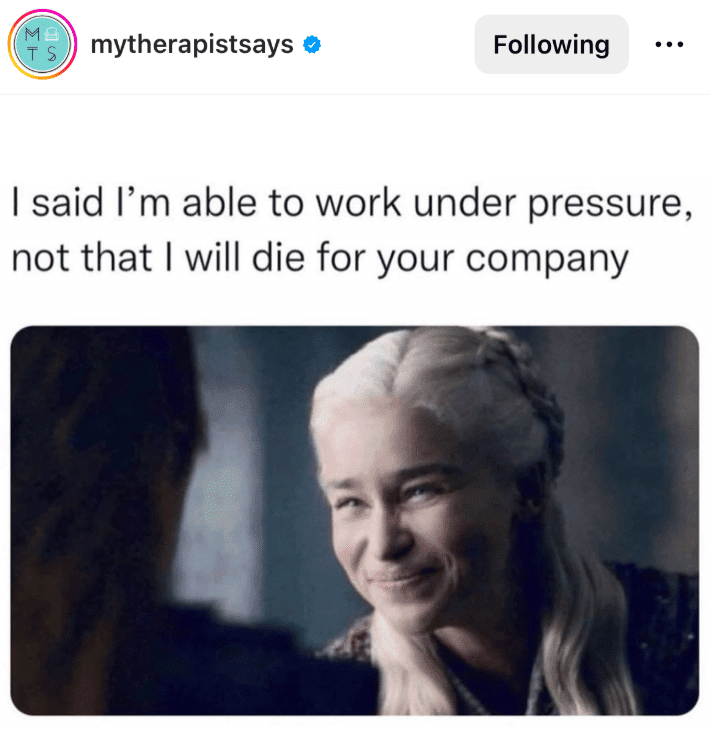
I love this meme. It speaks to a reality too many of us live. Yet I know for a fact that work doesn’t need to take all you have in order for you to achieve your goals. It actually doesn’t have to be hard–at least not all the time. BUT and also, the fact that it is hard isn’t your fault.
I’m lucky. Since my 20s, I’ve loved my jobs. I’ve been good at them, they challenged me, and they allowed me to keep learning. They fulfilled me. So I gave more to them than perhaps I should have. Late nights as a junior reporter, weekends as an ad agency strategist, early mornings as a qualitative research consultant. And I wore that overwork like a badge of honour. I was “busy” which in modern vernacular means, "important."
But as I moved up the ranks in my career in both title and pay, I found a part of me whispering, “is this it?” But it was quiet enough that I could ignore it.
Until I burned out. The shame I felt moving through that period of exhaustion and lost motivation after being the most driven person in my social network for most of my life. The embarrassment and sense of failure when I first admitted I needed rest. It was sticky and gross.
We live and operate in cultures of over work. You know it. I know it. We all know it. More and more employers believe and act as if people (their employees and even their customers) are lucky to have them and not the other way around. And we as workers are starting to believe it too. When we ask workshops whose fault it is when they burn out, most people answer, “my own.”
They’re wrong.
We have been taught to blame ourselves and feel shame when we respond in the most human ways to work cultures that demand too much of us. We’ve been raised to believe the lie that the harder you work, the better you are. That our productivity defines our worth.
Burning out forced me to look around, to pay attention, and to really see. To ask questions like, who benefits when I work myself sick? Who benefits when I work from a place of energy and joy? What does rest signify and is there another way to…work? I found out there was.
My life changed when I started asking these questions. But this note is getting a little long, so I’ll follow up next week with what that change looked and felt like. (and why it matters to you )
But I’ll leave you with a question. What are the whispers you’re ignoring in your life right now? And who benefits when you ignore them? Write down your answers somewhere special and we'll check in next week.
With all the love and creativity of a rested mind,
Chantaie